
2026
- Melanie Graf, University of Hamburg, DE, Sep 28 — Oct 2, 2026
-
Eitan Bachmat,
Ben Gurion University,
IL, Dec 06 — Dec 12, 2026 Talk: TBA, Dec 07, Dec 9-11, 2026
- Marc Mars Lloret, University of Salamanca, ES, Nov 8–Nov 28,2026
- Sumati Sura, Raman Research Institute, Bengaluru, IN, Sep 28–Oct 02
- James Grant, University of Surrey, Guildford, UK, Aug 26–Sep 26
- Alec Metsch, University of Cologne, DE, Aug 9 – Aug 15, 2026
- Matteo Zanardini, SISSA, Trieste, IT, Aug 9 – Aug 15, 2026
- Argam Ohanyan, University of Toronto, CA, Jun 17–Aug 20, 2026
- Moritz Reintjes, City University of Hong Kong, CN, Jun 7–Jun 19 and Jul 12–Jul 17, 2026
- Annachiara Piubello, University of Tübingen, DE, Jun 19 – Jun 27, 2026
-
Stevan Pilipović,
University of Novi Sad,
RS, May 5–May 8, 2026 Talk: Microlocal singularities of weakly convergent sequences, May 8, 2026
Abstract
Tartar’s defect measure has introduced a new approach to the analysis of linear and nonlinear equations, leading to significant progress both in theory and in applications. An important contribution was made by Gérard, whose work motivates us to further investigate the relationship between weakly and strongly convergent sequences in Sobolev spaces, in a way analogous to microlocalization via the Sobolev-type wave front set \(WF^s(f)\) (as well as the classical wave front set \(WF(f)\) of a distribution \(f\)), introduced by Hörmander.
We analyze the pull-backs and products within the framework of Sobolev spaces. In addition, Mikhlin-type multipliers acting from \(L^p_{\mathrm{comp}}\) to \(L^p_{\mathrm{loc}}\) are considered, in cases \(p=1\) and \(p=\infty\).
-
Bojan Prangoski,
Ss. Cyril and Methodius University in Skopje,
MK, May 5–May 8, 2026 Talk: Isometric Embeddings of Gevery Manifolds, May 8, 2026
Abstract
In his celebrated paper [3], Nash showed that every \(C^{\infty}\) compact \(m\)-dimensional manifolds can be isometrically embedded into \(\mathbb{R}^{m(3m+11)/2}\), while if the manifold is noncomapct then it can be isometrically imbedded into \(\mathbb{R}^{(m+1)m(3m+11)/2+2m+2}\); much later, Günther [2] lowered the dimension of the target Euclidian space. For real-analytic compact manifolds, the analytic isometric embedding into \(\mathbb{R}^{m(3m+11)}\) was shown by Greene and Jacobowitz in [1].
In this talk we consider the case when the manifold and the metric are of Gevrey regularity \(p!\, s\), \(s > 1\). By employing some of the ideas of Günther [2], we show that if the manifold is compact then it admits a Gevrey isometric embedding (of the same class) into \(\mathbb{R}^{m(3m+11)/2}\), while if the manifold is noncomapct than it can be isometrically imbedded into \(\mathbb{R}^{(m+1)m(3m+11)/2+2m+2}\) (again, the embedding has the same Gevrey regularity as the manifold). The talk is based on collaborative works with Andreas Debrouwere.
References:
[1] R. E. Greene, H. Jacobowitz, Analytic isometric embeddings, Ann. of Math. (2), 189–204, 1971
[2] M. Günther, Zum Einbettungssatz von J. Nash, Math. Nachr. 144 (1989), 165–187.
[3] J. Nash, The imbedding problem for Riemannian manifolds, Ann. Math. 63 (1956), 20–63.
- Jiří Podolský, Charles University, Prague, CZ, May 3–May 9, 2026
-
José M. Martín Senovilla,
University of the Basque Country, Bilbao,
ES, Apr 14–May 21, 2026 Math Colloquium: Singularity theorems in Gravitation, May 20, 2029 – 3.15 pm SkyLounge
Abstract
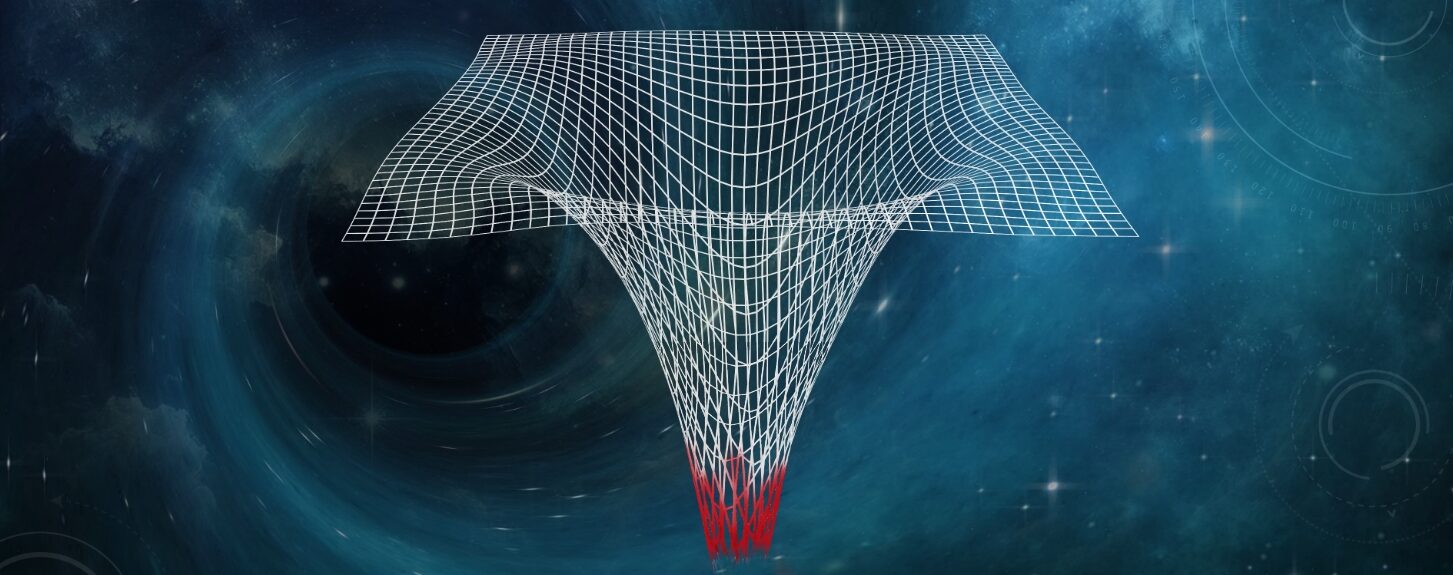
Black holes are the most enigmatic objects in the Universe, their secrets forever veiled from the outside. Yet an elusive idea, conceived by Roger Penrose while crossing the street, opened an unexpected window onto their inner nature. Outlined in just a couple of pages over six decades ago, this insight would ultimately be recognized with the 2020 Nobel Prize in Physics.
This colloquium explores Penrose’s pioneering singularity theorem—the first of what would later become known as the singularity theorems—and its enduring significance. After a brief journey through the historical context, we will uncover the essential ideas behind the theorem using only basic notions of geometry, introducing the mathematical concept of curvature and its deep connection to gravity. We will then examine its physical implications and lasting impact, illustrated with simple but revealing examples.
-
Jasson Vindas Diaz,
University of Gent,
BE, March 30–Apr 3, 2026 and Apr 10, 2026 Talk: Quantified Beurling’s uncertainty principle for Fourier transforms, Apr 2, 2026
Abstract
The uncertainty principle in harmonic analysis states that a non-zero function and its Fourier transform cannot be simultaneously too sharply localized. There are numerous precise mathematical formulations of this meta-theorem.
Beurling’s own version of the uncertainly principle for Fourier transforms is the following clean and elegant statement: Given \(f\in L^{1}(\mathbb{R})\),
\[\iint_{\mathbb{R}^{2}} |f(x)\widehat{f}(\xi)| e^{| x\cdot \xi| } \mathrm{d}x\mathrm{d}\xi<\infty \implies f=0. \] The goal of this talk is to present a general quantified version of Beurling's uncertainty principle. We will characterize in several ways those \(f\in L^{1}(\mathbb{R}^{n})\) such that \[\iint_{\mathbb{R}^{2n}} \frac{|f(x)\widehat{f}(\xi)| e^{| x\cdot \xi|}}{W(|x|+|\xi|)} \mathrm{d}x\mathrm{d}\xi<\infty, \] where \(W:[0,\infty)\to [1,\infty)\) is an unbounded non-decreasing function subject to certain natural regularity conditions. The talk is based on collaborative work with Lenny Neyt.
-
Nathalie Rieger,
Yale University, New Haven,
US, Mar 22–Mar 28, 2026 Talk: From Riemannian to Lorentzian: Embeddings of Signature-Changing Manifolds, Mar 27, 2026
Abstract
We examine a class of semi-Riemannian manifolds that undergo smooth metric signature change—from Riemannian to Lorentzian—across a hy- persurface with a transverse radical. This class includes physically mo- tivated cosmological models such as the Hartle-Hawking “no-boundary” proposal, in which the universe transitions smoothly from a Euclidean to a Lorentzian phase. We show that these manifolds admit isometric embeddings into higher-dimensional pseudo Euclidean spaces and, in par- ticular, prove the existence of global isometric embeddings of the canonical model into both Minkowski and Misner spaces. This framework provides a mathematical setting for studying smooth signature change and its role in higher-dimensional and cosmological models.
-
Carlo Rotolo,
University of Pisa,
IT, Mar 9–Mar 14, 2026 Talk: A synthetic Gannon-Lee Incompleteness Theorem, Mar 13, 2026
Abstract
In this talk I will present a joint work with Mathias Braun, in which we prove a synthetic version of the Gannon-Lee incompleteness theorem. We assume the recent synthetic characterization of trappedness and of the null energy condition by Ketterer, instead of the classical hypoteses.
I will start with an introduction on the incompleteness theorems of general relativity and the classical Gannon-Lee Theorem, and then I will describe Ketterer’s conditions and state our synthetic Gannon-Lee Theorem. If time allows, I will briefly discuss where our proof differs from the classical one and how we apply the synthetic conditions.
- Melanie Graf, University of Hamburg, DE, Feb 23–Mar 3, 2026
- James Vickers, University of Southampton, UK, Feb 16–Feb 21, 2026
- Annachiara Piubello, University of Copenhagen, DK, Feb 2 -July 31, 2026
- Giorgio Gatti, University of Padua, IT, Feb 1–Feb 28, 2026
2025
- Argam Ohanyan, U of Toronto, CA, Oct 3– Oct 24, 2025
- James Vickers, University of Southampton, UK, Sep 21–Sep 25, 2025
-
Keisuke Izumi,
Nagoya University,
JP, Aug 28–Sep 9, 2025 Talk: Areal inequality in weak gravity region, Sep 5, 2025
Abstract
Riemannian Penrose inequality gives the upper bound of the area of the outermost minimal surface in an asymptotically flat space with nonnegative curvature. This inequality shows, roughly speaking, the upper-bound area of black hole horizon, that is, it can be applied in a region with a strong gravitational field. We generalize this inequality so that it can be applied in weak gravitational fields, hence a generalization of Riemannian Penrose inequality.
- James Grant, University of Surrey, UK, Aug 8 — Sept 13, 2025
- Chang-Wan Kim, Mokpo National Maritime University, KR, Jul 21, 2025–Jul 19, 2026
- Robert Svarc, Charles University, Institute for Theoretical Physics, Prague, CZ, May 20–May 23, 2025
- Moritz Reintjes, Universität Konstanz, DE, Jun 16–Jun 19 and Jun 29–Jul 5, 2025
- James Grant, University of Surrey, UK, May 20–Jun 6, 2025
-
Šimon Knoška,
Charles University, Prague,
CZ Talk: Quantum imprints of gravitational shock (impulsive) waves, May 16, 2025
-
Alessandra Pluda,
University of Pisa,
IT, Apr 23–Apr 30, 2025 Talk: Geometric inequalities and Ricci-pinched manifolds, Apr 29, 2025
-
Stefan Suhr,
Ruhr University Bochum,
DE, Mar 4–Mar 21, 2025 Mini course: Introduction to Lorentzian Optimal Transportation, Mar 4, 2025
Abstract
This mini course (consisting of six talks) will introduce the basic techniques of optimal transportation in smooth Lorentzian geometry. Starting from the existence of causal couplings and optimal causal couplings, we will discuss dynamical optimal couplings and their structure (i.e. the Mather graph Theorem). Further topics include the Monge problem in Lorentzian geometry and Kantorovich duality. Conditions for the existence of dual solutions will be discussed as well. The last part of the course will be devoted to the characterization of the Einstein field equations via optimal transportation.
- James Grant, University of Surrey, UK, Feb 26–Mar 12, 2025
- Melanie Graf, University of Hamburg, DE, Feb 24–Mar 7, 2025
- Eric Ling, University of Copenhagen, DK, Jan 27–Feb 2, 2025
2024
- James Grant, University of Surrey, UK, Dec 11–Dec 17, 2024
-
Giulio Sanzeni,
Ruhr University Bochum,
DE, Nov 19– Nov 22, 2024 Talk: Geodesic causality in Kerr spacetimes, Nov 20, 2024
Abstract
Kerr spacetimes are solutions of vacuum Einstein field equations and model the gravitational field around rotating black holes. The natural analytic extension of the Kerr spacetime over the horizons and in the negative radial region, called Kerr star, contains closed causal curves. Despite causality violations, I will sketch the proof of the nonexistence of closed null geodesics in the Kerr-star spacetime.
- Miguel Manzano, University of Salamanca, ES, Nov 10–Nov 22, 2024